
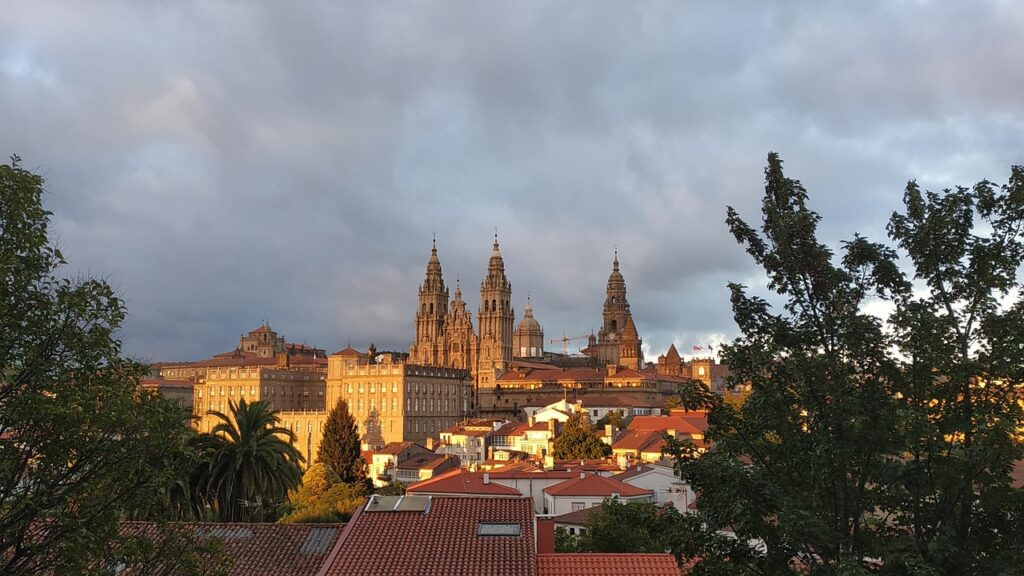
In the green hills of Galicia, in northwest Spain, stands a building that has drawn millions of footsteps for more than a thousand years. The Cathedral of Santiago de Compostela is not just a masterpiece of stone; it is the heart of one of the greatest journeys people still undertake today. Whether you walk for faith, for sport, for reflection, or simply out of curiosity, arriving at its great square at dawn or sunset and seeing those towers appear is something that stays with you forever.
Who Was the Apostle James?
James, son of Zebedee and brother of John, was one of the first men Jesus called to follow him. The two brothers were mending nets by the Sea of Galilee when Jesus approached and said, “Come after me.” They left everything immediately—boat, nets, father—and became part of the small inner group with Peter. Jesus nicknamed them “Boanerges,” sons of thunder, because of their fiery temperament. They were the ones who once asked if they should call down fire from heaven on a village that had refused to receive Jesus.
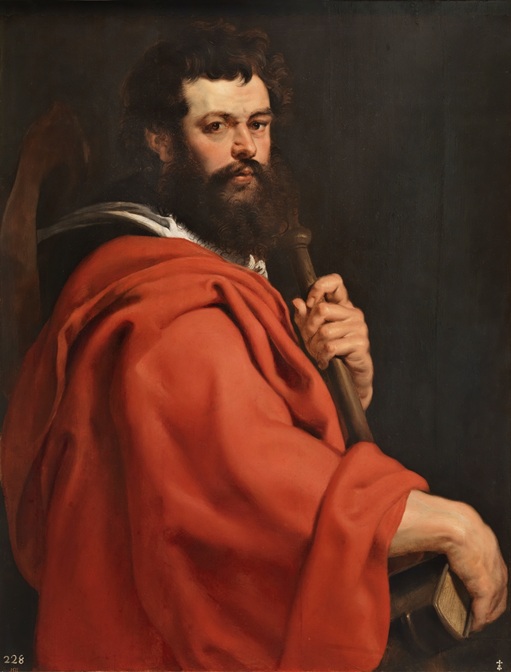
After the resurrection and Pentecost, James devoted himself to spreading the Gospel. Tradition holds that he was the first apostle to carry the message beyond Judea, traveling as far as the western edge of the known world—Hispania, the Roman province that would one day become Spain. He preached along the Iberian coast and interior, though the early Christian communities he founded were small and fragile.
His life ended violently around the year 44 AD in Jerusalem. King Herod Agrippa I, wanting to please certain factions, ordered James executed by the sword. He thus became the first apostle to suffer martyrdom. His death shocked the young Church, but it also strengthened the conviction that the message was worth dying for.
Why Was the Apostle James Buried in Spain?
The story of how the body of an apostle executed in Jerusalem ended up more than 4,000 kilometers away in distant Galicia has always sounded incredible, yet it has been believed with devotion for centuries. According to the most widespread tradition, after the martyrdom a small group of faithful disciples collected the body, placed it in a stone boat without sails or oars, and entrusted it to the sea and divine providence.
Guided by angels (or simply by ocean currents, depending on how you prefer to tell it), the boat crossed the Mediterranean, passed through the Strait of Gibraltar, and sailed up the Atlantic coast until it reached the shores of Galicia near the Roman port of Iria Flavia. From there, the disciples carried the remains inland and buried them in a quiet place in the forest, today known as Santiago de Compostela.
Over the centuries, some historians have tried to find rational explanations—perhaps James really preached in Spain and died there, or perhaps his disciples brought the relics later—but the Church has never required historical proof for the tradition. What matters is that from the ninth century onward, the tomb became a beacon of hope for Christian Europe.
The Legend of Compostela: How a Hermit Discovered the Tomb of Saint James
Around the year 813, a hermit named Pelagius (or Pelayo) was living in the forests of Galicia when he began to notice strange lights dancing at night over a certain spot in the woods—lights that looked like a field of stars fallen to earth. The Latin name for “field of stars” is campus stellae, which over time became Compostela.
Pelagius told the local bishop, Teodomiro, who went to investigate. After clearing the undergrowth, they found an ancient burial site with three bodies: one larger, presumed to be James, and two smaller ones believed to be his disciples Athanasius and Theodore. The news reached King Alfonso II of Asturias, who was fighting against Muslim forces further south. He ordered a small chapel built on the site and made the first royal pilgrimage—an act that marked the beginning of everything.
The discovery came at exactly the right moment. Europe was under pressure from invasions, and a sign that the apostle had chosen the far west as his resting place gave Christians new courage. Soon the phrase spread: “God has opened a new door in the West.”
The First Church of Compostela
The original chapel was very modest—just a small pre-Romanesque building of stone and wood, enough to protect the tomb and welcome the first pilgrims. Alfonso II and his successors enlarged it little by little, but it remained a rural sanctuary for almost a century.
In the tenth century, however, the feared Muslim leader Almanzor marched north and destroyed the city (though, according to legend, he respected the tomb itself). When the danger passed, the Christians rebuilt with greater ambition, and by the late eleventh century a larger Romanesque church had begun to rise—the direct ancestor of the cathedral we know today.
The Cathedral of Santiago de Compostela as We Know It Today
The cathedral that greets pilgrims now is mainly the work of the twelfth and thirteenth centuries, built in luminous Romanesque style with later Baroque additions that make it even more dramatic. Its most famous façade, the Portico of Glory, was carved by Master Mateo and his workshop around 1188. Walking beneath its three arches and touching the central column (where millions of hands have left a visible hollow) is one of those moments every pilgrim remembers.
Inside, the great surprise awaits: the Botafumeiro, the largest censer in the world, which on special occasions swings through the transept like a silver comet, spreading clouds of incense. And beneath the high altar, down a narrow staircase, is the silver urn that tradition says contains the bones of the apostle. Pilgrims descend, often in tears, to embrace the statue of Saint James above and give thanks for having arrived.
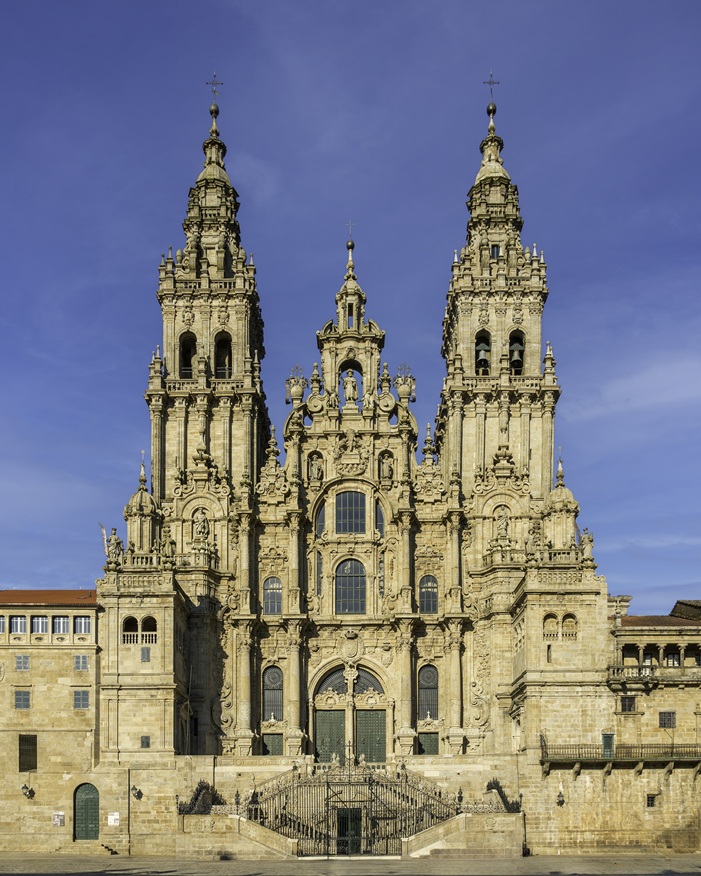
Over the centuries the cathedral has been enlarged, restored, and adorned. The Baroque façade of the Obradoiro, facing the great square, was added in the eighteenth century and gives the building its theatrical final touch. Yet despite all the changes, the spirit remains the same: a place that welcomes the tired, the curious, the broken, and the joyful.
The Origins of the Camino de Santiago
The Camino de Santiago as an organized pilgrimage began almost immediately after the discovery of the tomb. By the eleventh century there were already hospitals, bridges, and hostels along the main routes. Four great French roads converged on the Pyrenees and then became one inside Spain—the famous French Way that most people still follow.
Monasteries, kings, and town councils competed to make the journey safer and more comfortable. Guidebooks were written (the first, in the twelfth century, is part of the Codex Calixtinus), and a whole economy of hospitality grew up around the pilgrims. The scallop shell became the universal sign: you still see it today on backpacks, road markers, and doorways.
For centuries the Camino was one of the three great Christian pilgrimages, alongside Jerusalem and Rome. Kings walked it, saints walked it, ordinary farmers walked it, and even criminals were sometimes sent as penance. Wars, plagues, and the Reformation reduced its numbers for a while, but it never disappeared completely.
Santiago de Compostela Today
Today the city lives in gentle harmony between past and present. More than 400,000 people received the Compostela certificate in 2024 alone, and on any summer morning the great square fills with pilgrims arriving from every corner of the planet. Some come on foot, others by bicycle, a few on horseback, and many simply want to stand in front of the cathedral and feel the weight of so many centuries.
The cathedral itself, after years of careful restoration completed in 2021, glows warmer than ever, and the old town around it remains one of the most beautiful in Spain. You can still hear Galician bagpipes at dusk, taste pulpo a la gallega in the market, and join the pilgrims’ Mass at noon when the priest welcomes everyone in half a dozen languages and the Botafumeiro sometimes flies.
Whether you believe every detail of the old stories or not, one thing is certain: few places in the world manage to make strangers feel so instantly at home. The road ends here, but in a way it also begins again. People leave lighter than they arrived, carrying a little piece of Santiago—and perhaps a little piece of themselves that they finally found—wherever they go next.
What to Know If You Want to Pilgrimage to Compostela
Deciding to walk to Santiago is one of those choices that sounds simple but ends up changing many people in ways they never expect. The good news is that the Camino is remarkably open to almost everyone: you don’t need to be an athlete or even particularly religious. What you do need is a little planning, realistic expectations, and the willingness to let the road surprise you.
Here are some practical things to keep in mind before you start:
- Choose the route that suits you best: There are more than a dozen official Caminos. The French Way is the most popular and has the best infrastructure, but the Portuguese, Northern, Primitive, English, or Silver routes each offer their own landscapes, solitude, or challenge.
- Consider your experience level: First-timers often prefer the last 100 km (from Sarria on the French Way or Tui on the Portuguese) so they qualify for the Compostela and can complete it in five to seven days. Seasoned walkers tend to go for longer or more demanding options like the Primitivo or Camino del Norte.
- Look for the best season: Spring (April–June) and autumn (September–October) give mild weather and manageable crowds. Summer is hot and packed; winter is peaceful and atmospheric but cold, wet, and with very short days in Galicia.
- Get your pilgrim credential: You can pick it up at the starting point, from a friends-of-the-Camino association, or even many churches. Stamp it twice a day along the way; it’s your key to the inexpensive albergues and the document you’ll hand in at the Pilgrim Office to receive the official Compostela certificate. Don’t forget to register online to make everything easier.
- Study your route and prepare properly: Comfortable, already-broken-in shoes, a light backpack (no more than 10 % of your body weight), and a basic idea of daily stages will save you a lot of pain. Apps like Buen Camino or Gronze, plus a good guidebook, make planning easy these days.
When everything is ready, all that’s left is to take the first step. The road itself will teach you the rest. Buen Camino!